
Concrete Cancer: What Melbourne Property Owners Need to Know
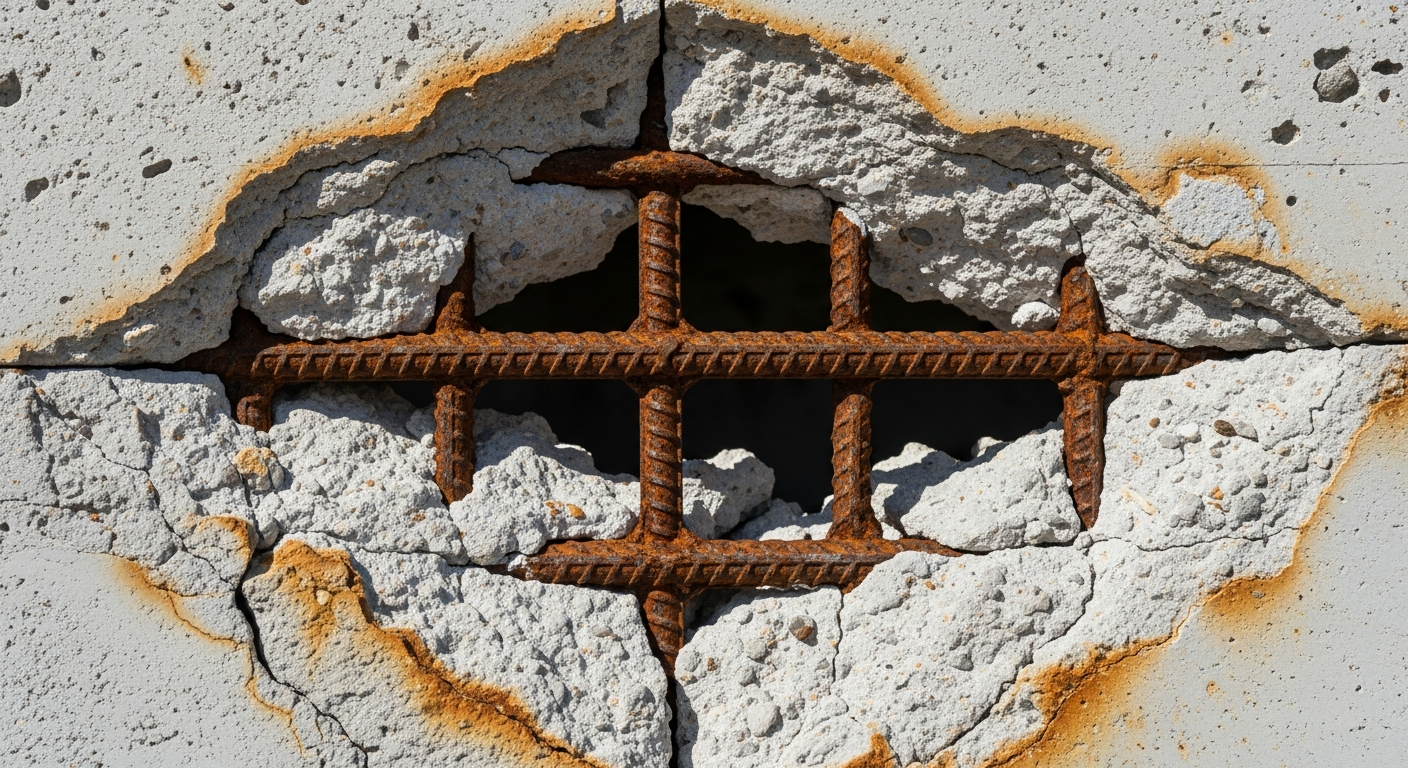
Concrete cancer (technical term: concrete spalling) is the cracking and blowing-out of concrete caused by corrosion of embedded steel reinforcement, which expands up to six times its original volume as it rusts. The visible symptoms are chunks of concrete falling away, rust staining on surfaces, cracking that follows the line of reinforcement, and exposed corroded rebar. It is progressive and accelerates if left untreated. The problem is widespread in Melbourne buildings constructed between the 1960s and early 2000s, especially in car park structures, balcony soffits, facade panels and basement walls. Early localised repair costs $500–$2,000 per area; widespread remediation can run to $100,000–$500,000+.
Concrete cancer (spalling) is a growing problem in Melbourne buildings. Understand what causes it, how to spot it early, and what remediation involves.
Concrete cancer — technically known as concrete spalling — is one of the most serious structural issues affecting Melbourne buildings. It's particularly prevalent in buildings from the 1960s through to the early 2000s, and it's a problem that accelerates if left untreated.
What Is Concrete Cancer?
Concrete cancer occurs when the steel reinforcement inside concrete begins to corrode. As the steel rusts, it expands — up to six times its original volume. This expansion cracks and eventually blows out the concrete surrounding it, a process called "spalling."
The result is visible as:
- •Chunks of concrete falling away from the surface
- •Rust staining on concrete surfaces
- •Cracking patterns that follow the line of reinforcement
- •Exposed, corroded reinforcement bars (rebar)
What Causes It?
Carbonation
Over decades, carbon dioxide from the atmosphere slowly penetrates concrete, reducing its alkalinity. Concrete's high pH (around 12-13) normally protects the embedded steel through a process called passivation. As carbonation progresses and the pH drops below about 9, this protective layer breaks down and corrosion begins.
Chloride Ingress
In coastal areas or buildings exposed to salt-laden air, chlorides can penetrate the concrete and initiate corrosion even in alkaline conditions. While Melbourne isn't coastal in the traditional sense, properties in bayside suburbs and areas near salt-treated roads can be affected.
Insufficient Cover
If the steel reinforcement was placed too close to the surface during construction (insufficient "cover"), carbonation reaches the steel faster. This was a common issue in buildings constructed during rapid growth periods when quality control was sometimes lacking.
Water Ingress
Water is the catalyst that makes all other causes worse. Moisture carries chlorides deeper into concrete, accelerates carbonation, and provides the electrolyte needed for the corrosion reaction to proceed. This is why waterproofing failures often lead to concrete cancer in the affected areas.
How Common Is It in Melbourne?
Very common. Melbourne's building stock includes thousands of concrete structures built between the 1960s and 2000s. Many of these buildings:
- •Used concrete mixes with relatively high water-cement ratios (more permeable)
- •Had minimal concrete cover over reinforcement
- •Were not designed with the maintenance regimes they actually need
We see concrete cancer most frequently in:
- •Car park structures (constant exposure to water and vehicle-borne contaminants)
- •Balcony soffits (exposed to weather with compromised waterproofing above)
- •Facade panels and columns
- •Basement walls and retaining structures
Remediation Process
Concrete cancer repair is not a cosmetic fix — it's a structural remediation process:
1. Assessment and Testing
- •Visual inspection and documentation of all affected areas
- •Concrete cover surveys to map reinforcement depth
- •Carbonation testing (phenolphthalein indicator)
- •Chloride content testing where relevant
- •Structural engineering assessment for severely affected areas
2. Concrete Removal
All contaminated and carbonated concrete around corroded reinforcement must be removed, typically to at least 25mm behind the reinforcement. This is done with pneumatic tools and requires careful work to avoid damaging sound concrete.
3. Steel Treatment
Corroded reinforcement is cleaned to bright metal (SA 2.5 standard). If more than 20-30% of a bar's cross-section has been lost, supplementary reinforcement may need to be installed.
4. Protective Coatings
Cleaned reinforcement is coated with a zinc-rich primer or other corrosion-inhibiting coating before new concrete is applied.
5. Concrete Repair
Proprietary repair mortars are used to rebuild the concrete profile. These mortars are designed to be compatible with existing concrete, provide adequate alkalinity, and resist future carbonation.
6. Protective Systems
Depending on the situation, additional protective measures may include:
- •Anti-carbonation coatings on exposed concrete surfaces
- •Cathodic protection systems for large-scale applications
- •Improved waterproofing to prevent future water ingress
Cost Considerations
Concrete cancer repair costs vary enormously depending on the extent of damage:
- •Minor repairs (small localised areas): $500 - $2,000 per location
- •Moderate repairs (multiple areas on a structure): $10,000 - $50,000
- •Major remediation (widespread throughout a building): $100,000 - $500,000+
The critical point is that concrete cancer is progressive. A $5,000 repair today could prevent a $100,000 remediation in five years. Early detection and prompt treatment is the most cost-effective approach.
What Property Owners Should Do
If you own or manage a concrete building more than 20 years old, we strongly recommend a professional condition assessment. This doesn't mean you'll necessarily need expensive repairs — many buildings are in good condition. But identifying early-stage issues allows for planned, budgeted maintenance rather than emergency repairs when chunks of concrete start falling.
Need help with this?
If you're dealing with any of the issues discussed in this article, we can help. Get a free assessment or upload a photo for instant AI analysis.