
Bathroom & Wet Areas
Comprehensive restoration of leaking showers and degraded bathrooms.
Leaking showers are one of the most common causes of structural damage in homes.
We perform complete shower base repairs, regrouting, recaulking, shower screen replacements, and full membrane replacements.
Our wet area restorations stop water damage in its tracks and restore the aesthetic appeal of your bathroom.
Why Choose Us?
- Stop costly structural rot
- Eliminate mould and mildew
- Full base reconstruction
- Seamless finish
Ready to fix your bathroom & wet areas issue?
Contact us today for a comprehensive assessment and quote.
Signs your shower needs attention
- Cracked, missing or discoloured grout
- Silicone that is mouldy, peeling or pulling away from the corners
- Water escaping the shower onto the bathroom floor
- Loose or drummy tiles in or around the shower
- Damp skirting, flooring or walls in the room next door
How it works
- 1
Send photos or call
Tell us what you are seeing and send a few photos. It helps us arrive with the right equipment.
- 2
Inspection and diagnosis
We find the cause, not just the symptom, and explain what we found in plain language.
- 3
Written quote
You get a clear, itemised quote for the agreed scope before any work starts.
- 4
Repair and handover
We complete the work, clean up and walk you through what was done.
Featured Project
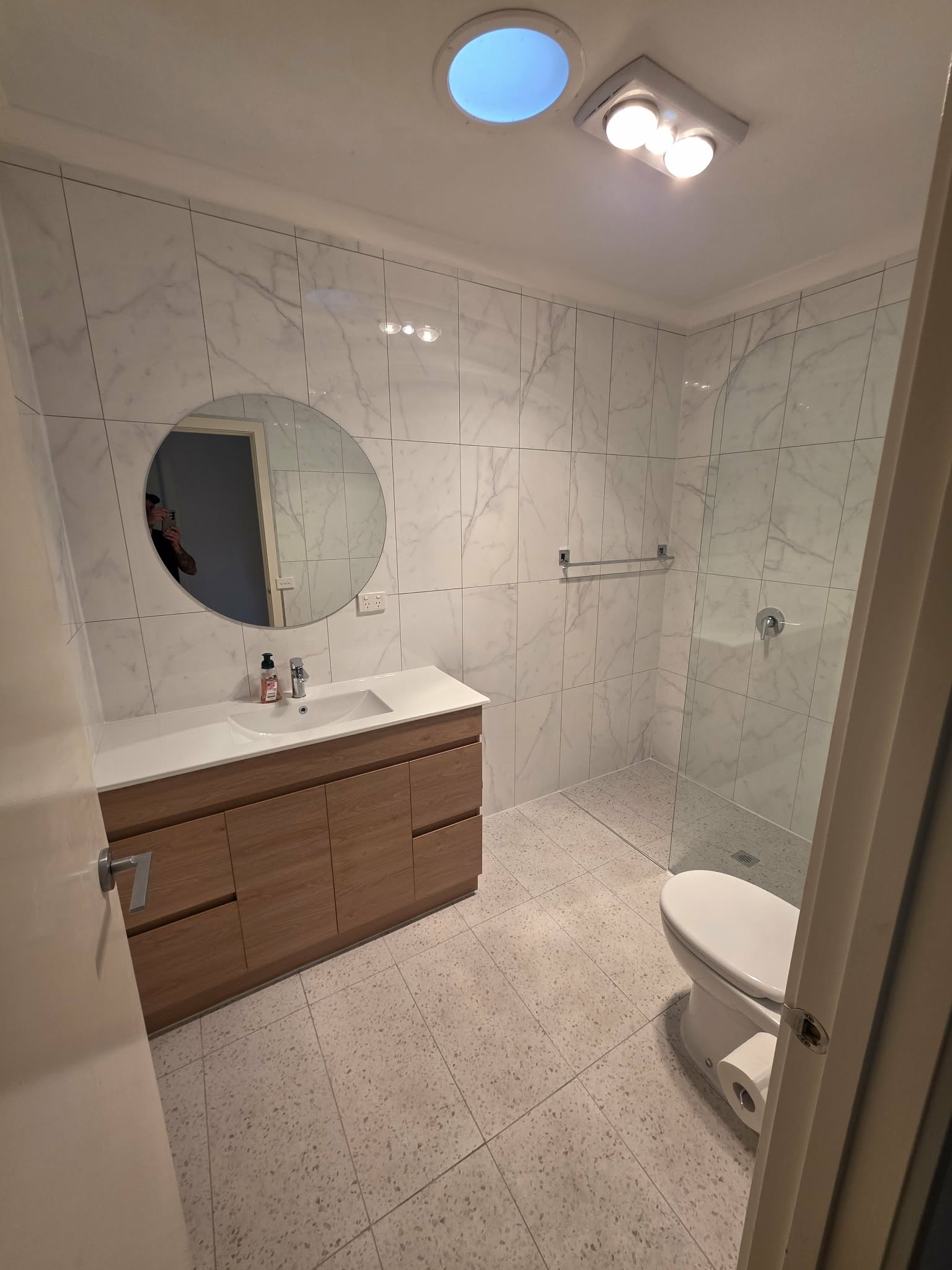
Recent feature bathroom — full marble-look re-tile, frameless walk-in shower and floating vanity finished by our team.
Our Results
Real before and after photos from our completed projects.
Bathroom & Wet Areas questions
What is the difference between re-grouting and re-tiling?
Re-grouting renews grout joints for appearance and minor water resistance; re-tiling (strip-and-relay) exposes and replaces the waterproofing membrane and is required for any active water ingress.
Re-grouting removes deteriorated or cracked grout from existing tile joints and replaces it with fresh grout. It improves appearance and reduces water penetration through joints, but does not address or renew the waterproofing membrane beneath. Re-tiling (strip-and-relay) removes the tiles entirely, exposes the substrate and waterproofing layer for inspection and repair, and installs a new membrane before new tiles are laid. Re-grouting is appropriate where tile and substrate are sound and there is no active water ingress — it is a maintenance task. For any active leak or evidence of membrane failure (hollow tiles, damp beneath), a full strip-and-relay is required.
How long does a shower last before needing re-waterproofing?
A correctly waterproofed shower to AS 3740-2021 standard typically lasts 10–15 years before remediation is warranted, though the first signs of failure may appear earlier if installation quality was poor.
With quality materials and a correctly installed membrane, a residential shower should not require remediation for 10–15 years under normal domestic use. Factors that shorten this lifespan include: high water hardness causing grout and silicone joint degradation; heavy daily use; use of abrasive or acidic cleaners; inadequate ventilation causing accelerated mould growth; and most commonly, substandard original installation. Showers in Melbourne rental properties — which often receive above-average use and below-average maintenance — frequently require remediation at 8–12 years. Annual inspection of silicone joints in the shower is a 5-minute maintenance task that can extend overall waterproofing life significantly.
What causes black mould in bathrooms?
Black mould in bathrooms is caused by persistent moisture — typically from inadequate ventilation, failed waterproofing allowing moisture into wall cavities, or condensation — and will return until the moisture source is resolved.
Black mould (typically Cladosporium or Stachybotrys species in wet areas) is a symptom of persistent moisture, not a standalone problem. In bathrooms, the most common causes are: inadequate ventilation — steam condensing on cold surfaces and not being extracted; failed or absent waterproofing allowing moisture into wall cavities where it cannot dry; grout joint failure allowing water into the tile bed; and in some cases, structural moisture ingress from outside. Mould that returns within weeks of cleaning despite the use of anti-mould products almost certainly indicates a moisture source that hasn't been addressed. A bathroom exhaust fan that vents externally (not into the roof cavity) is the single most effective mould prevention measure for a well-waterproofed bathroom.
Is mould from water damage dangerous?
Some mould species found in water-damaged properties can pose health risks, particularly for people with respiratory conditions, allergies, or compromised immune systems — professional assessment and moisture source resolution are recommended.
Mould in water-damaged properties ranges from common surface mould (relatively low risk with normal precautions) to more problematic species that can cause respiratory irritation, allergic reactions, and exacerbation of asthma — particularly in children, elderly occupants, and people with compromised immune systems. The most significant health risk comes from mould inside wall cavities and behind wet area linings where it is not visible and spore dispersal is not controlled. The health risk is best managed by resolving the moisture source (failed waterproofing, inadequate ventilation) so the environment no longer supports mould growth. For occupant health concerns related to mould, consult your GP and consider contacting your local council's environmental health officer.
Do I need a building permit to retile my bathroom in Victoria?
A building permit is required for bathroom renovation work that involves changes to waterproofing, fixtures, or configuration — not for like-for-like tile replacement over a sound existing surface.
Under the Victorian Building Act 1993 and Building Regulations 2018, a building permit is required for bathroom renovation work classified as 'building work' — this includes removal and replacement of waterproofing (most bathroom strip-and-relays), any reconfiguration of the wet area, and changes to the structural or plumbing configuration. A permit is generally not required for cosmetic retiling over an existing sound surface where no changes are made to waterproofing or layout. In practice, any work involving removal of tiles and application of a new waterproofing membrane in a residential property should have a building permit. Carrying out unpermitted building work is an offence under the Victorian Building Act 1993.