
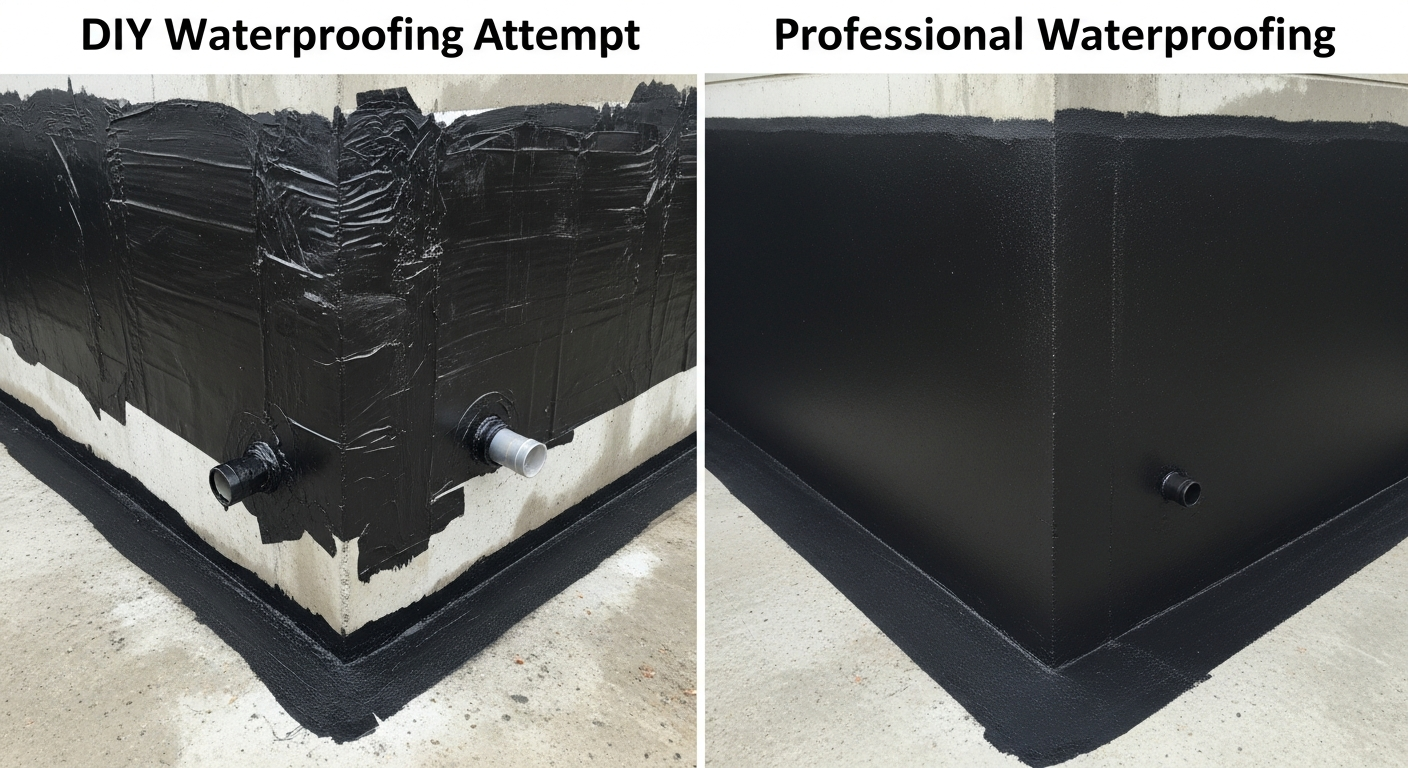
DIY vs Professional Waterproofing: When to Call in the Experts
Reasonable DIY waterproofing jobs include minor silicone sealant replacement around baths or sinks, applying a penetrating concrete sealer to driveways and paths, and recoating an existing timber deck. Jobs that need a qualified professional include all internal wet area waterproofing (which must comply with AS 3740-2021 and should come with a compliance certificate and workmanship warranty), balcony and roof membrane replacement, rising damp diagnosis and treatment, and any structural waterproofing such as basement tanking or retaining walls. Remediating a failed DIY waterproofing attempt typically costs 2–4× the cost of having a professional do it correctly the first time, because the original damage usually compounds before symptoms appear.
Hardware store waterproofing products promise easy fixes, but the reality is more complex. Here's an honest guide to what you can handle yourself and when you need a professional.
Walk into any Bunnings or hardware store and you'll find an aisle of waterproofing products with labels that make the job sound simple: "just paint it on." And for certain situations, a DIY approach can work perfectly well. But for others, it's a costly mistake that ends up requiring professional remediation anyway — at a higher total cost than if you'd called a professional from the start.
When DIY Can Work
Minor Sealant Replacement
If you have cracked or missing silicone around a bathtub, kitchen sink, or window frame, replacing it is a reasonable DIY job:
- •Remove all old sealant completely (this is the critical step most people rush)
- •Clean the surfaces with methylated spirits
- •Apply quality neutral-cure silicone (not acetic cure, which corrodes metals)
- •Tool the joint smoothly and allow full cure time (typically 72 hours for wet areas)
External Concrete Sealer
Applying a penetrating concrete sealer to a driveway, path, or retaining wall is straightforward:
- •Clean the surface thoroughly and let it dry completely
- •Apply the sealer with a roller or spray unit
- •Allow full cure before exposing to water
Minor Deck/Balcony Coating Touch-ups
If you have a timber deck with a surface coating that's wearing thin but the underlying structure is sound, a re-coat with a quality decking oil or coating is manageable.
When You Need a Professional
Any Internal Wet Area Waterproofing
Waterproofing of wet areas (bathrooms, laundries, showers) should only be carried out by a qualified, experienced waterproofer who can supply a compliance certificate against AS 3740-2021 and provide a workmanship warranty. The reasons are practical:
- •Membrane systems require specific preparation, primers, reinforcing fabrics, and application techniques
- •Flood testing is essential and requires proper execution
- •A compliance certificate gives you the documentation insurers and future buyers will ask for
- •A workmanship warranty gives you recourse if the system fails
- •Failure means ripping out and redoing the entire bathroom
Balcony or Roof Membrane Replacement
Replacing a failed waterproofing membrane on a balcony or flat roof involves:
- •Removing all existing tiles, screed, and membrane back to the structural substrate
- •Repairing any structural damage (concrete cancer, corroded reinforcement)
- •Installing new drainage if required
- •Building correct falls for drainage
- •Applying a new membrane system with appropriate upstands and detailing
- •Flood testing before any tiling
This is skilled work that requires experience with multiple trades and materials.
Rising Damp or Subfloor Issues
Rising damp is a complex problem that requires proper diagnosis before treatment. Many "rising damp" issues are actually caused by:
- •Poor drainage around the building
- •Bridged damp-proof courses
- •Condensation rather than rising moisture
- •Plumbing leaks
A professional can diagnose the actual cause and provide an appropriate solution, rather than applying a generic "damp treatment" that may not address the real issue.
Structural Waterproofing
Any waterproofing that involves structural elements — retaining walls, basement tanking, lift pits, or below-grade structures — requires engineering input and professional execution. The consequences of failure are serious and expensive.
The Real Cost Comparison
Here's the reality many people discover too late:
| Scenario | DIY Attempt | Professional (First Time) | Professional (After Failed DIY) |
|---|---|---|---|
| Shower re-waterproofing | $200-400 (materials) + risk | $2,000-3,500 | $4,000-6,000 |
| Balcony membrane | $300-600 (materials) + risk | $3,000-8,000 | $10,000-20,000 |
| Bathroom renovation WP | $150-300 (materials) + risk | $1,500-2,500 | $3,000-5,000 |
The "after failed DIY" column accounts for the additional demolition, repair of damage caused by water ingress during the period the DIY fix appeared to work, and the professional remediation required.
Our Honest Advice
We'd rather you knew upfront whether your situation needs professional help. If you're unsure, send us a photo through our AI Assessment tool or give us a call. We'll tell you straight whether it's something you can handle or whether you need expert help — no charge, no obligation.
Need help with this?
If you're dealing with any of the issues discussed in this article, we can help. Get a free assessment or upload a photo for instant AI analysis.