
Bathroom Renovations in Melbourne
From a new shower to a complete strip-out and rebuild. We are waterproofing specialists first, so the part of your bathroom you never see is done properly.
Choose the scope that fits
Not sure which one you need? Send us photos and we will tell you honestly whether a refresh is enough or whether the waterproofing needs replacing.
Shower renovation
Strip the shower back, rebuild the base, waterproof the recess and re-tile, with a new screen and tapware. The rest of the room stays as it is.
Suits: Leaking or tired showers in an otherwise sound bathroom.
Bathroom refresh
Keep the layout and plumbing where they are and update the surfaces and fittings: tiles, vanity, toilet, mirror, lighting and accessories.
Suits: Dated bathrooms with no water damage behind the tiles.
Full renovation
Take the room back to frame and slab, repair what is found, then waterproof, tile and fit out a new bathroom. Layout changes can be scoped here.
Suits: Failed waterproofing, layout changes or a complete transformation.
One of our renovations, start to finish
A full bathroom renovation by our team, photographed at each stage on site.
- Stage 1
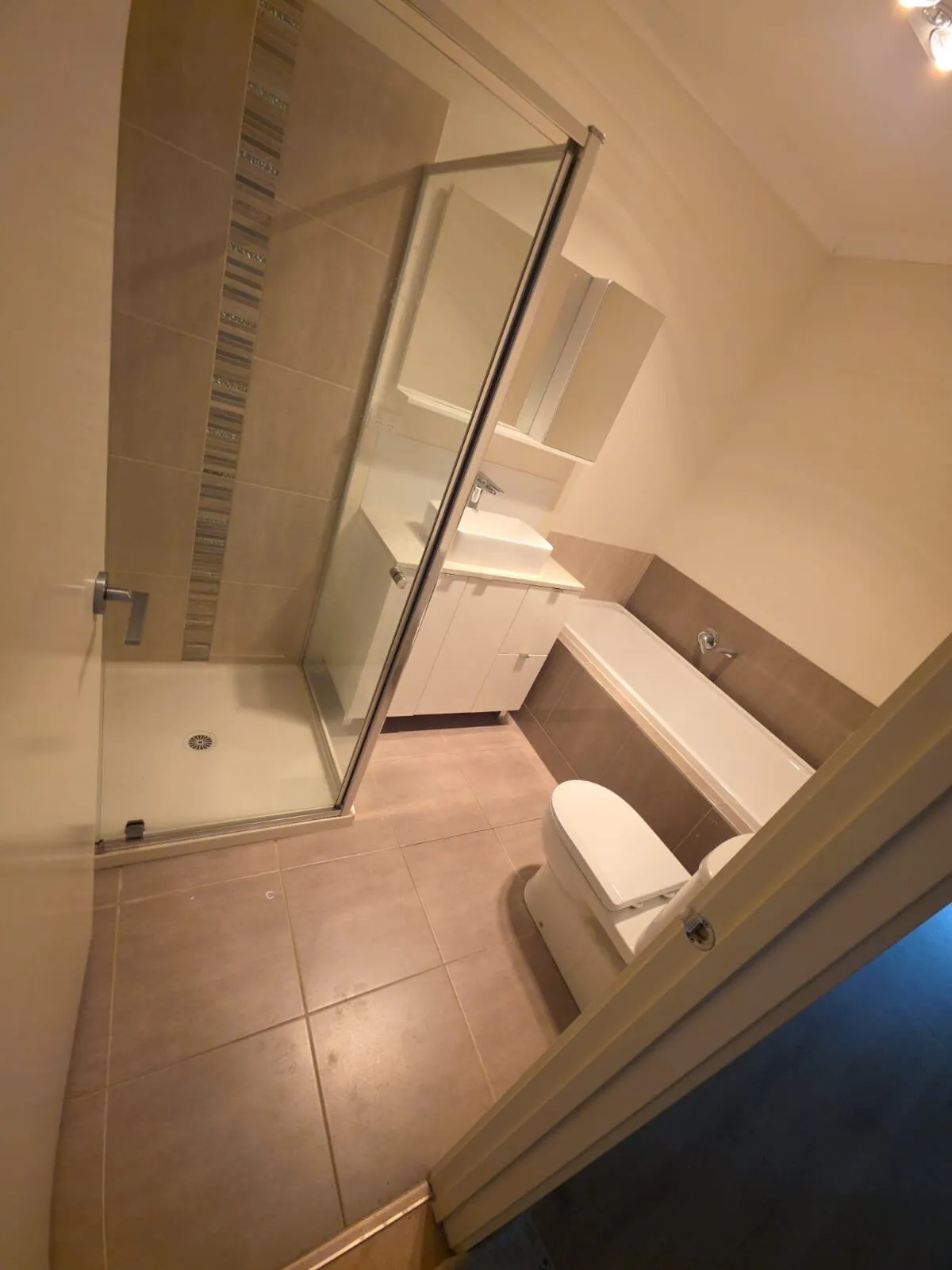
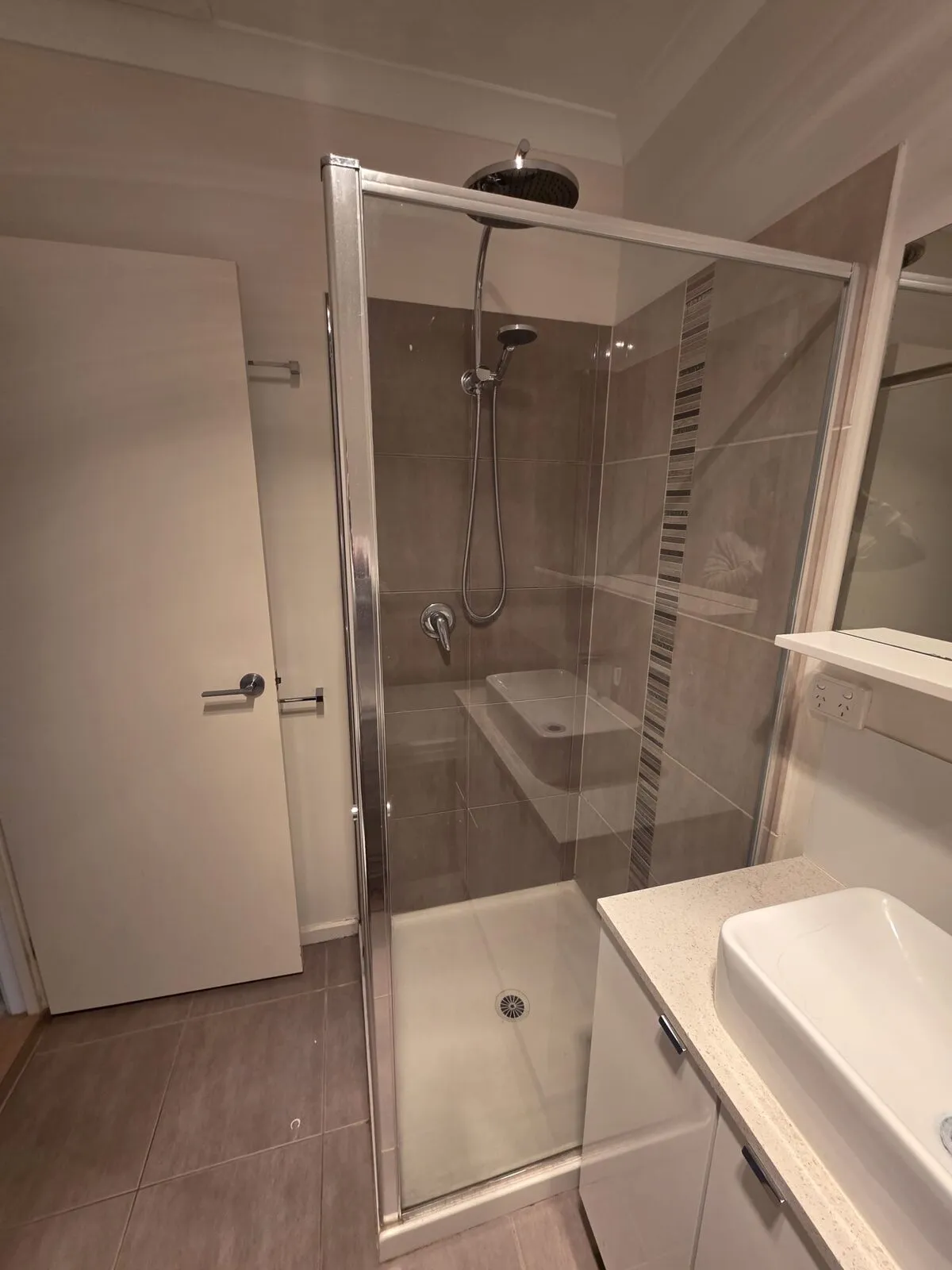
Before
A tired original bathroom with an ageing shower stall, vanity, bath and toilet.
- Stage 2
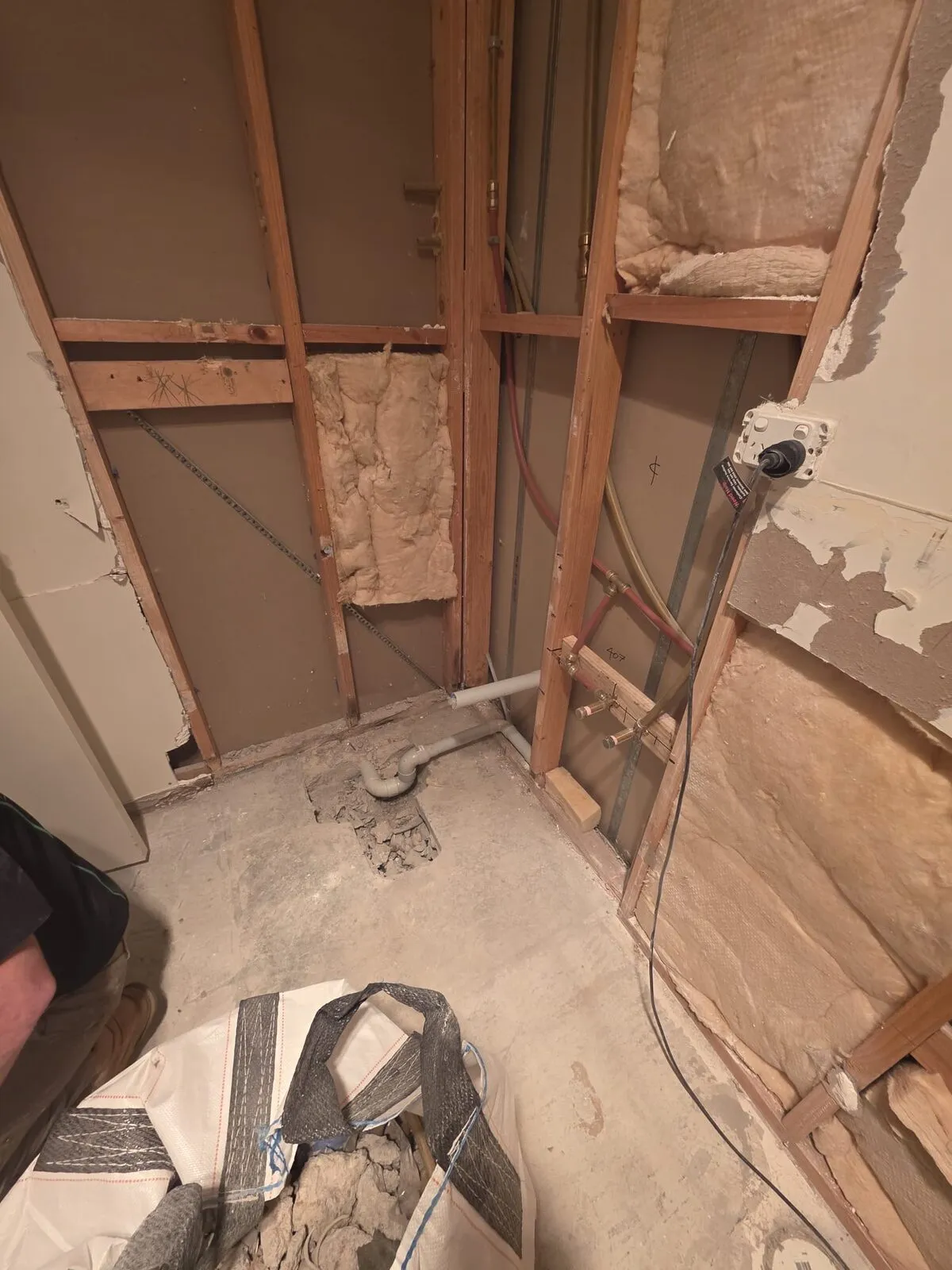
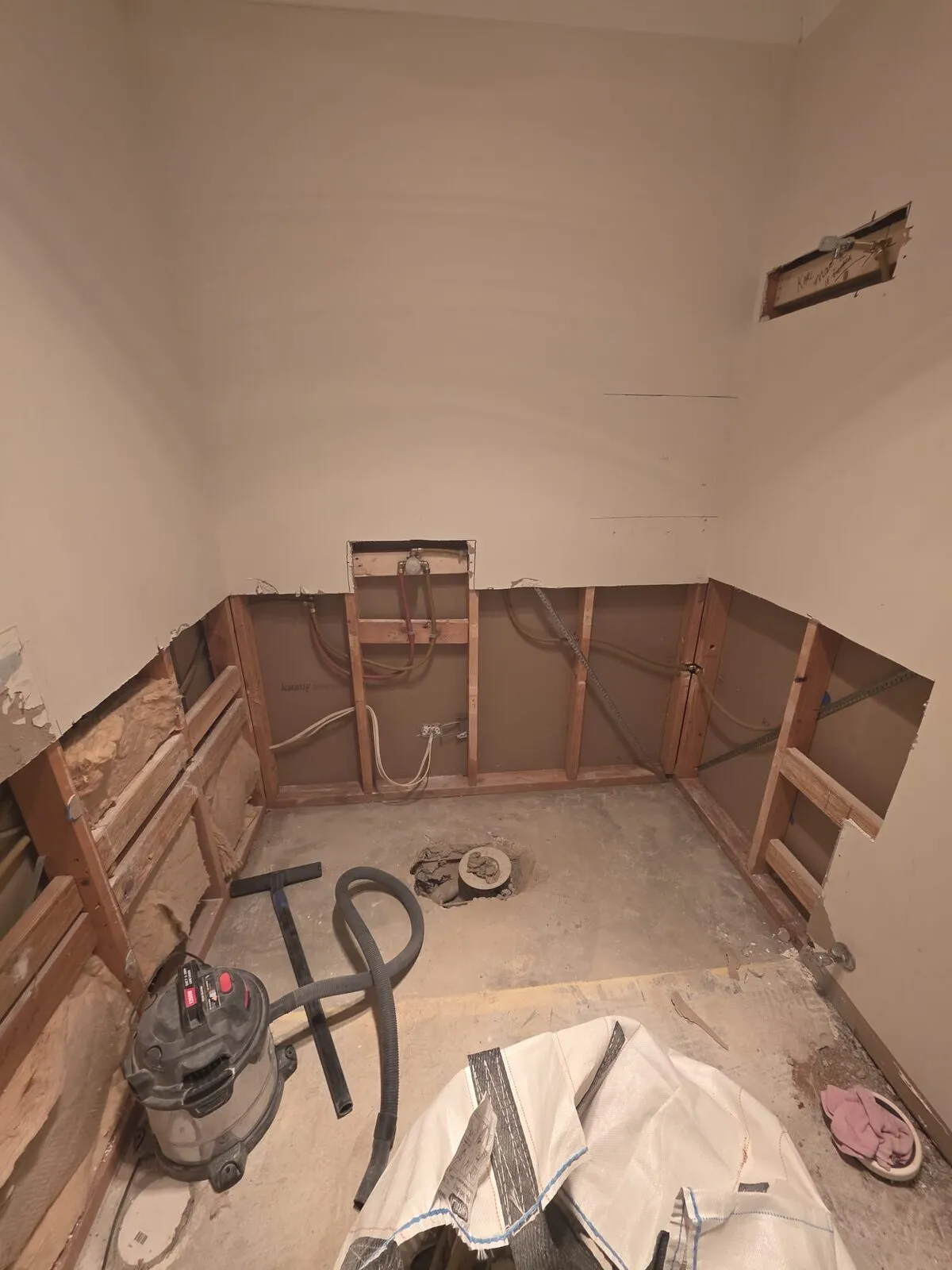
Strip-out
Everything removed back to studs and slab so the frame, plumbing and substrate could be checked and repaired before anything new went in.
- Stage 3
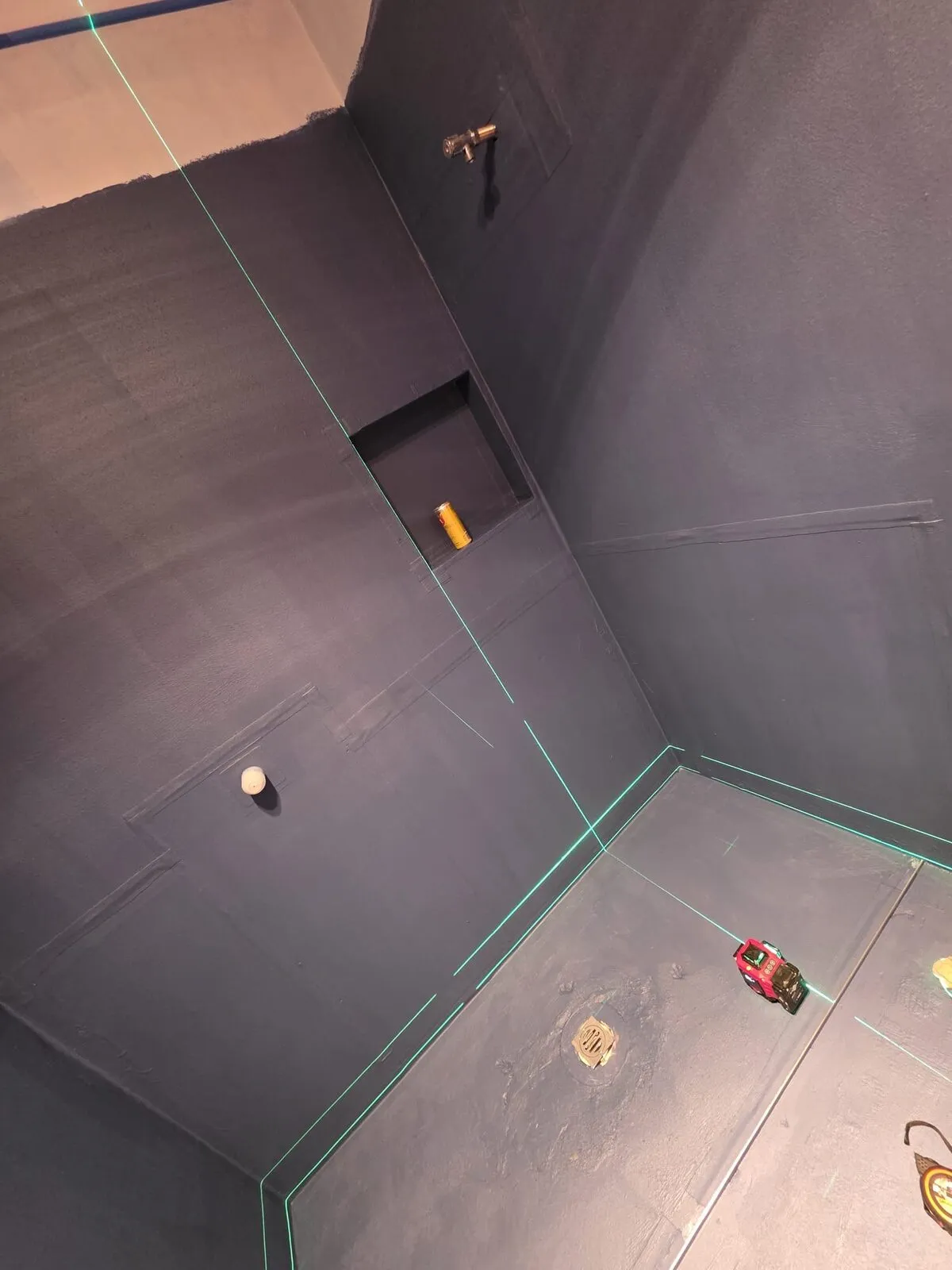
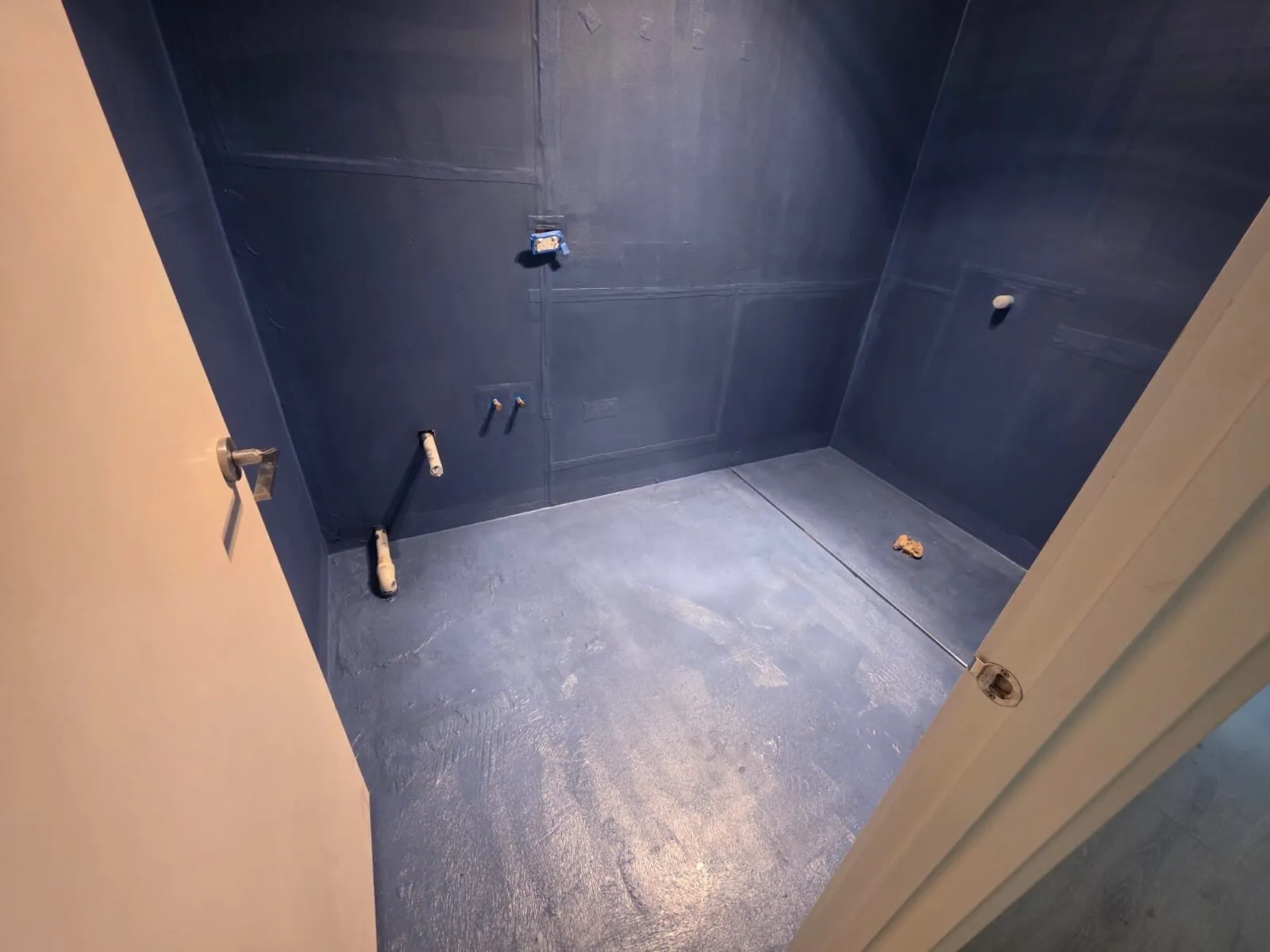
Waterproofing
A two-coat membrane across the walls, floor and shower niche, left to cure fully before any tiling started.
- Stage 4
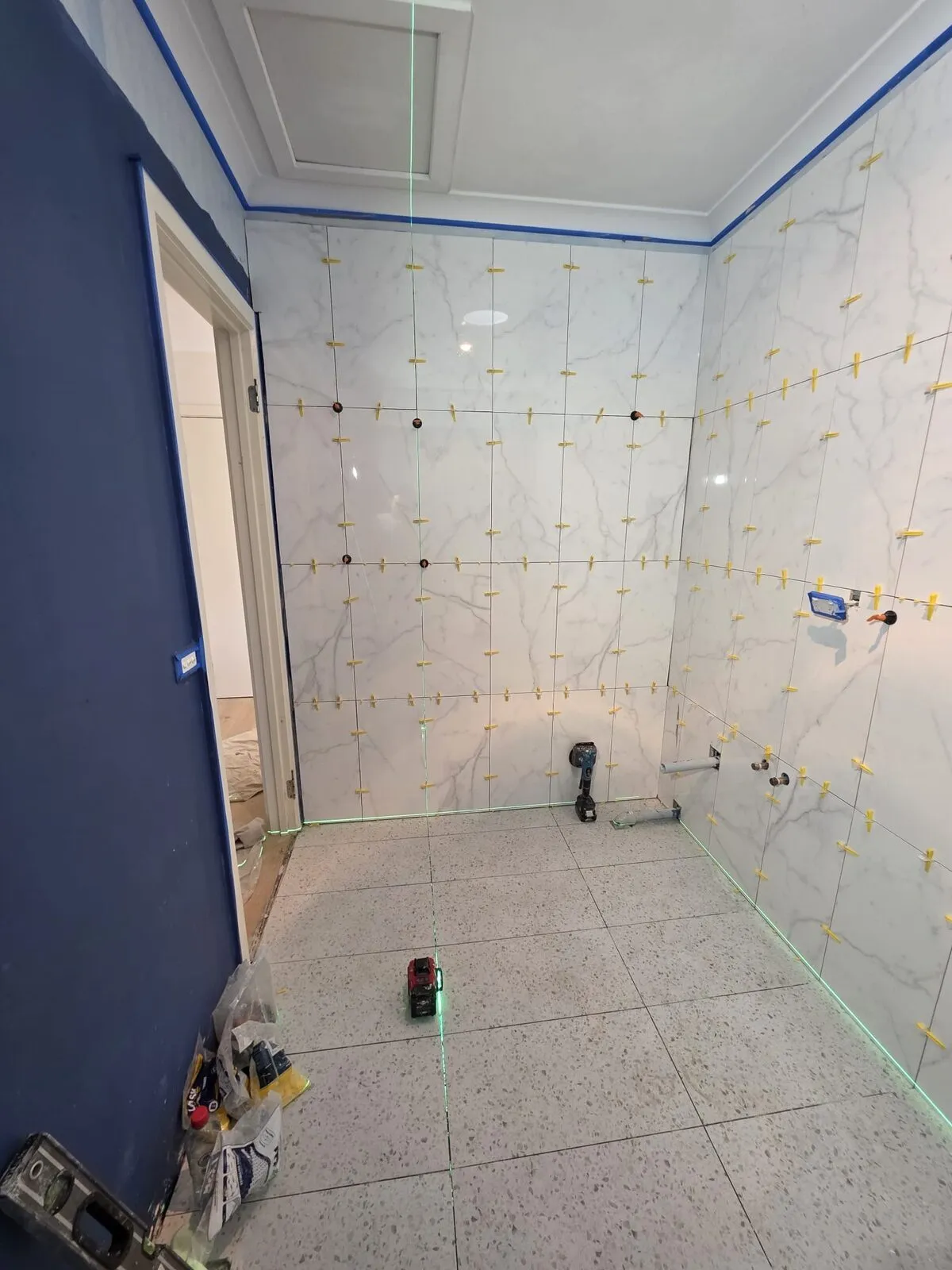
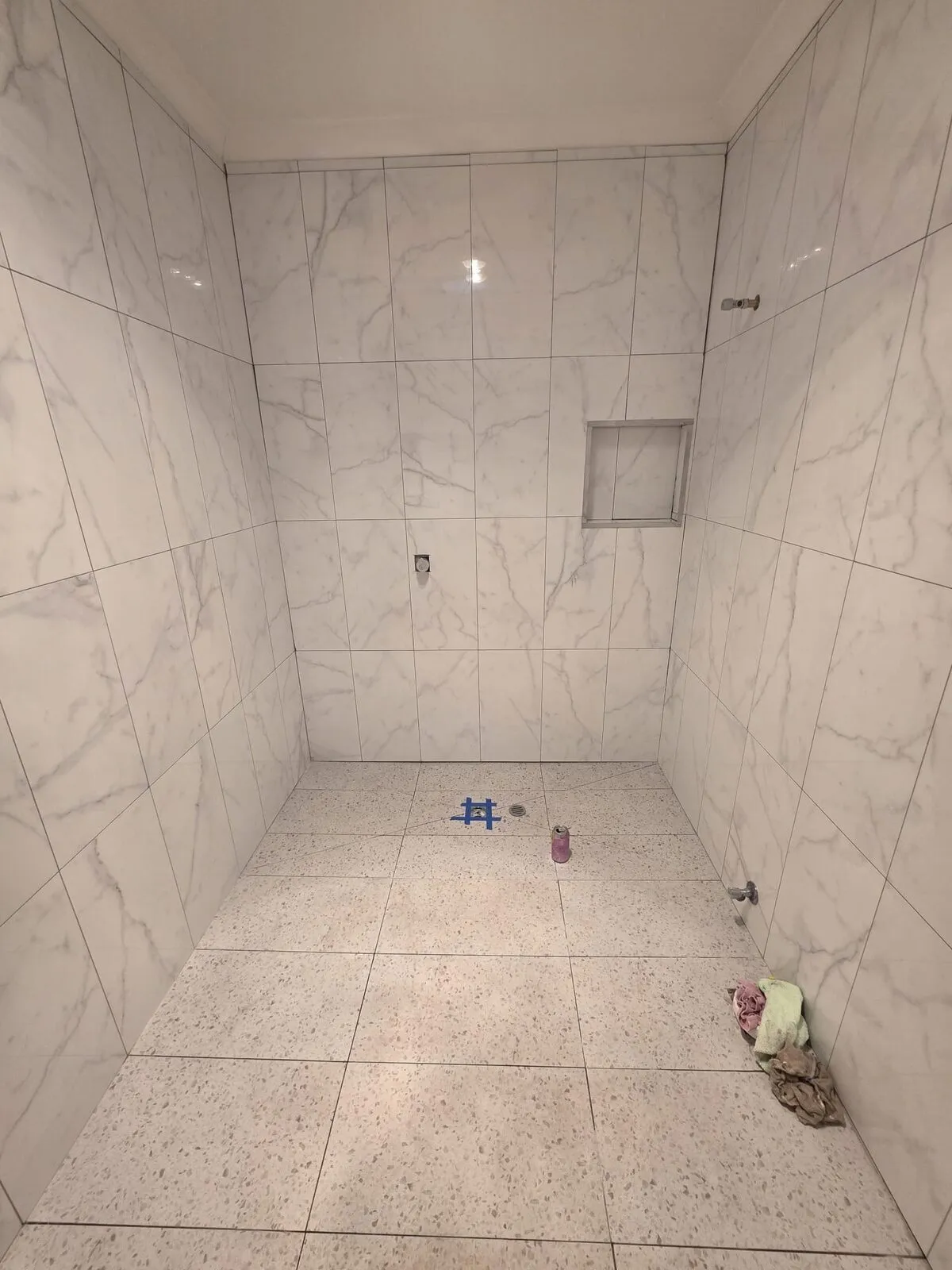
Tiling
Large-format marble-look wall tiles set with levelling clips and laser lines, with a built-in shower niche.
- Stage 5
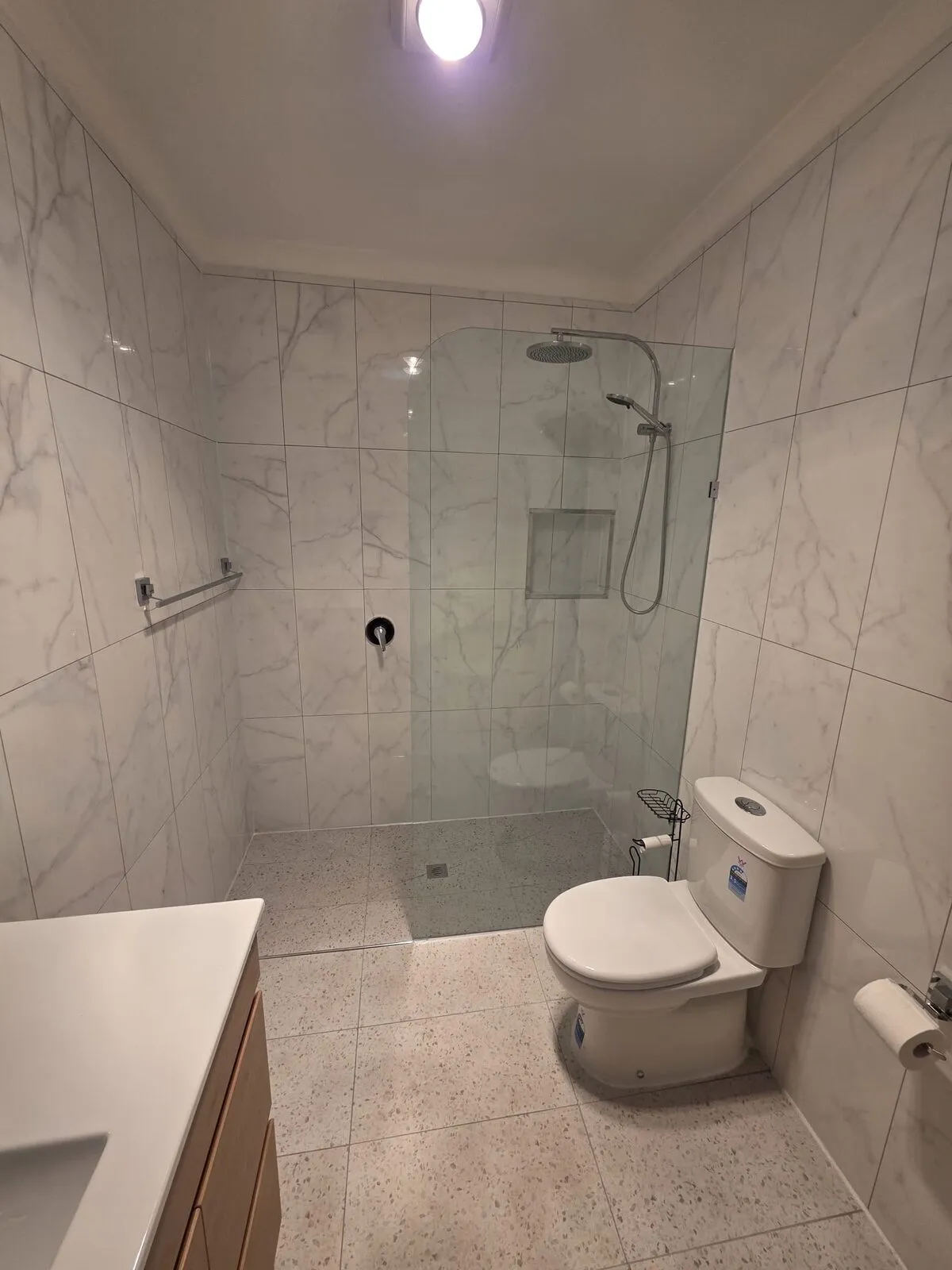
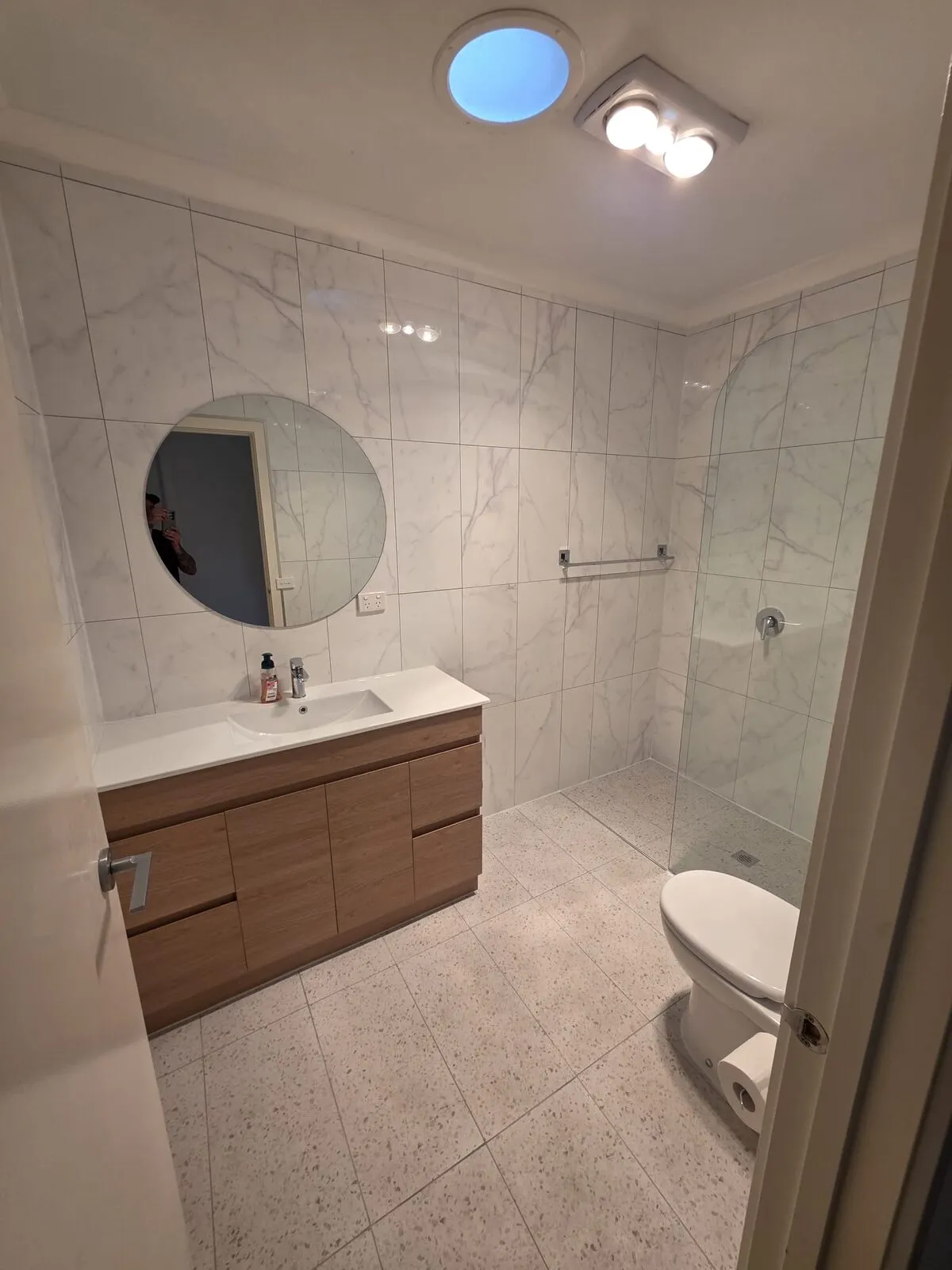
Finished
Frameless walk-in shower with rainhead, timber vanity with stone top, round mirror and new toilet.
How a renovation runs with us
- 1
Send photos and details
Tell us what you want to change and send photos of the whole room. A rough size and your timing help us scope it.
- 2
Site inspection
We measure up, check for existing water damage and confirm what stays, what goes and what needs to move.
- 3
Itemised quote
You get a written quote for the agreed scope, broken down so you can see where the money goes.
- 4
Strip-out and repairs
The room is stripped and the frame, floor and substrate are repaired before any new work starts.
- 5
Waterproofing
Membrane applied to AS 3740-2021 and given its full cure time. This is the step that decides whether a bathroom lasts.
- 6
Tiling, fit-out and handover
Tiles, fixtures and fittings go in, followed by a final clean and a walk-through with you.
A standard strip-and-refit typically takes 7–14 business days on site. Membrane cure time is built into the schedule and is never shortened.
What affects the price
Every bathroom is different, so we quote each one on its scope rather than giving a figure from a photo. These are the main things that move the price:
- Room size and the area to be tiled
- Whether fixtures stay in place or plumbing moves
- Damage found behind the tiles once the room is opened up
- Tile, tapware, vanity and screen selections
- Apartment access, approvals and owners corporation requirements
- Other trades needed, such as plumbing and electrical work
What to send us
The more of this you include, the faster we can scope and quote.
- Your suburb and whether it is a house, unit or apartment
- Photos of the whole room plus any damage or leaks
- Approximate room dimensions
- Whether you want to keep or move the shower, vanity, toilet or bath
- Finishes you like (photos or links are fine)
- When you would like the work done
Only need a leak fixed?
If your shower is leaking but you are happy with how the bathroom looks, a targeted repair may be all you need.
Bathroom renovation questions
How long does a bathroom renovation take?
A standard bathroom strip-and-refit including waterproofing and retiling typically takes 7–14 business days, with membrane cure time a mandatory step that cannot be shortened.
Timeline drivers include the size of the bathroom, the extent of substrate repairs discovered during strip-out, the mandatory cure time for the waterproofing membrane (a minimum of 24–48 hours for most products, longer in cold or humid conditions), tile availability, and the complexity of the fit-out. We always build proper cure time into our schedule — this is the step most frequently rushed by less experienced contractors and the single most common cause of premature failure in bathroom renovations.
Do I need to waterproof my entire bathroom or just the shower?
AS 3740-2021 requires waterproofing of the entire shower enclosure to 1800mm height, the bathroom floor perimeter to 100mm up walls, and all floor waste surrounds — and full-floor waterproofing is strongly recommended.
For a shower recess: the entire floor and walls to a minimum of 1800mm (or to the ceiling where the height is less). For the remainder of the bathroom floor: a 100mm upstand around the perimeter and around any floor waste. In practice, for a full bathroom renovation, we waterproof the entire floor and all areas that will regularly contact water — the marginal cost at construction time is small, and it eliminates future failures at zone boundaries. For apartments in Melbourne, floor-to-ceiling waterproofing in shower recesses is strongly recommended given the consequences of water ingress to the unit below.
Can you renovate a bathroom in an apartment or unit?
Yes — apartment bathroom renovations are a significant part of our work, with additional steps for building management approval, OC compliance, and higher waterproofing standards given the units below.
Apartment bathroom renovations require more coordination than house bathrooms: building management or OC approval is typically required before work commences; adjoining occupants may need to be notified; structural plumbing changes usually require a plumbing permit; and waterproofing must be applied to a higher standard given the consequences of water ingress to units below. Working hours are typically restricted by OC rules. We are experienced with the Melbourne strata environment — we manage the approvals process, liaise with building managers, ensure our work complies with OC requirements, and coordinate all trades within your building's access constraints.
Do I need a building permit to retile my bathroom in Victoria?
A building permit is required for bathroom renovation work that involves changes to waterproofing, fixtures, or configuration — not for like-for-like tile replacement over a sound existing surface.
Under the Victorian Building Act 1993 and Building Regulations 2018, a building permit is required for bathroom renovation work classified as 'building work' — this includes removal and replacement of waterproofing (most bathroom strip-and-relays), any reconfiguration of the wet area, and changes to the structural or plumbing configuration. A permit is generally not required for cosmetic retiling over an existing sound surface where no changes are made to waterproofing or layout. In practice, any work involving removal of tiles and application of a new waterproofing membrane in a residential property should have a building permit. Carrying out unpermitted building work is an offence under the Victorian Building Act 1993.
My bathroom was renovated recently and is already leaking. Why?
Recently renovated bathrooms most often fail because the membrane was not applied to AS 3740-2021 standard, curing time was insufficient, the substrate was not properly prepared, or movement joints were omitted.
The most frequent causes of failure: membrane not applied by a qualified practitioner to AS 3740-2021; inadequate membrane thickness or coverage — particularly at corners, floor waste surrounds, and junctions; tiling commenced before the membrane had fully cured; substrate not correctly prepared or repaired prior to membrane application; and movement joints (flexible silicone at wall-floor junctions and internal corners) not installed or installed with rigid grout instead of silicone. If your renovation was completed within the last 10 years by a registered practitioner, you may have rights under the Domestic Building Contracts Act 1995 — our inspection report documents the failure cause in a format suitable for a VCAT application.
What types of tiles do you work with?
We work with all standard tile types — ceramic, porcelain, natural stone, large-format rectified, encaustic, and mosaic — with installation method and adhesive selection specific to each material.
We install all standard tile types used in Australian residential and commercial construction: ceramic, porcelain, natural stone (marble, travertine, slate, granite), encaustic and terracotta, large-format rectified tiles (600×600 and above), and mosaic tiles. Each material has specific requirements for substrate preparation, adhesive selection, grout joint sizing, and sealing. Natural stone in wet areas requires periodic resealing with a penetrating stone sealer to prevent moisture absorption and staining. Large-format tiles mandate 95% adhesive coverage under AS 3958.1 — this requires back-buttering and cannot be achieved with a standard notched trowel technique alone.
Ready to start planning?
Send us photos of your bathroom and what you have in mind. We will come back to you about the next step.
Start your renovation enquiry