
5 Warning Signs Your Balcony Waterproofing Has Failed
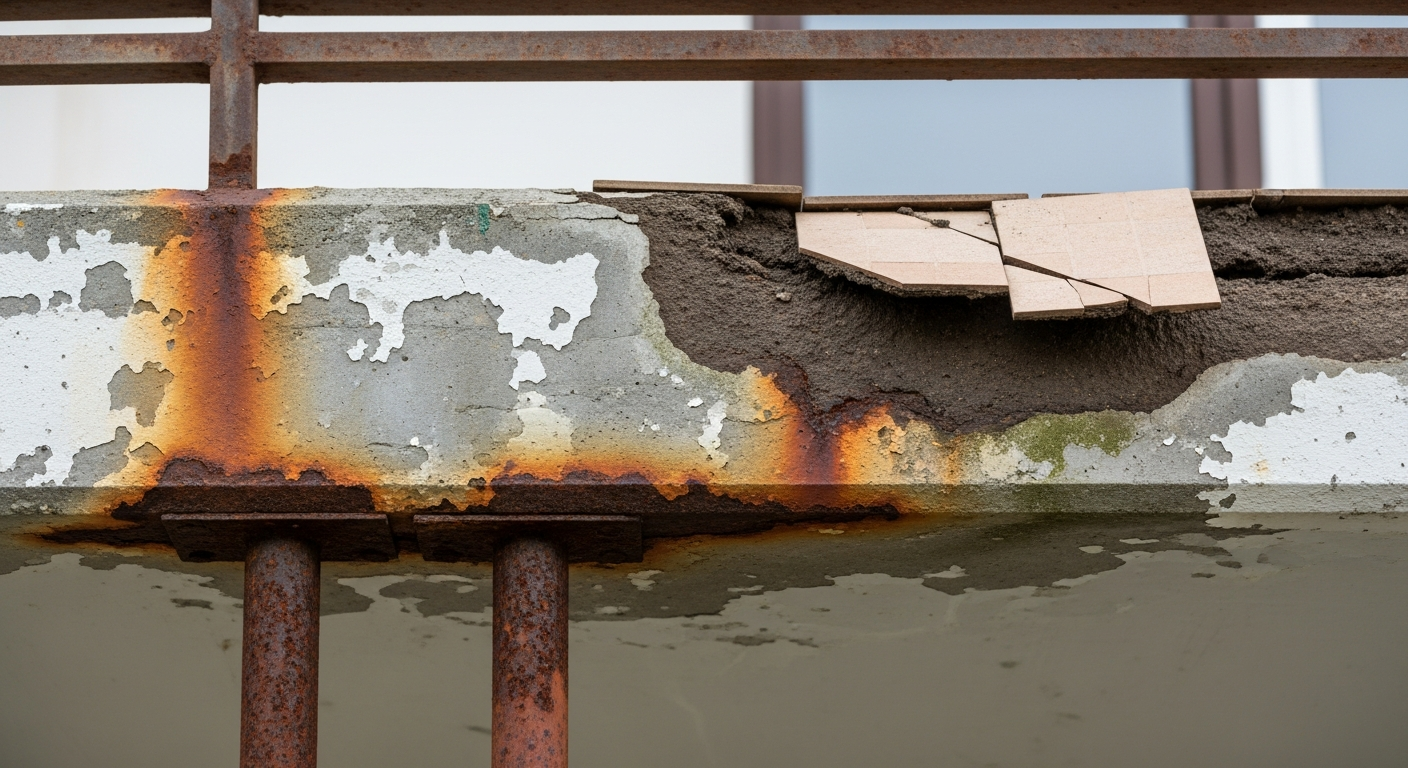
The five clearest signs a Melbourne balcony's waterproofing has failed are: (1) water stains, bubbling paint or yellow-brown rings on the ceiling of the room below; (2) cracked grout or 'drummy' (hollow-sounding) tiles, especially at edges and corners; (3) rust staining around balustrade fixings or embedded steel; (4) persistent ponding water that doesn't clear within 24 hours of rain; and (5) a musty smell near balcony doors or in storage spaces beneath. Any one of these means the membrane has been breached and the failure will progressively worsen with every rain event — balcony leaks do not stabilise on their own.
Balcony leaks are one of the most common — and expensive — defects in Melbourne apartments. Learn the early warning signs before minor issues become major structural problems.
Balcony waterproofing failures are among the most common building defects in Melbourne, particularly in apartment buildings constructed between 2000 and 2018. The combination of cost-cutting during the construction boom, exposure to Melbourne's weather extremes, and the natural ageing of membrane systems means thousands of balconies across the city are at risk.
Why Melbourne Balconies Fail So Often
Three things make Melbourne's balcony stock particularly vulnerable. First, the climate: 650mm of rain a year combined with sustained UV through summer and frequent 20°C+ thermal cycling stresses every membrane and sealant continuously. Second, the construction era: a large proportion of Melbourne apartments were built during the 2000–2018 boom, when speed and price were under intense pressure and waterproofing was often the line item that got squeezed. Third, the detailing: balconies sit at the most demanding waterproofing junction of any building — exposed to weather above, finished surfaces over the membrane, drainage that must work perfectly, balustrade fixings that penetrate the membrane, and a wall junction that has to absorb thermal movement.
Different construction eras present different failure modes:
- •Pre-1990 balconies typically have rendered or tiled surfaces over bitumen or no membrane at all. Most have already been remediated or are due.
- •1990–2000 buildings often used early acrylic membranes that have well exceeded their realistic life and are failing in large numbers now.
- •2000–2018 boom-era apartments commonly have polyurethane or cementitious membranes with detailing shortcuts at upstands, drains and balustrade fixings — these are the most common active failures across the inner suburbs.
- •Post-2018 buildings benefit from tighter NCC requirements and increased regulatory scrutiny, but commissioning defects still appear in the first 5–7 years.
Sign 1: Water Stains on the Ceiling Below
The most obvious indicator is discolouration or staining on the ceiling of the room directly beneath a balcony. These stains typically appear as:
- •Yellow-brown rings that grow over time
- •Bubbling or peeling paint
- •Damp patches that worsen during or after rain
- •White, fluffy salt deposits (efflorescence) where water has carried minerals out of the concrete
If you're seeing this in an apartment building, the waterproofing membrane on the balcony above has almost certainly failed. The water may be tracking along structural elements, meaning the leak source could be metres away from where the stain appears. We regularly trace ceiling stains in one apartment back to a failed drain detail two units away.
What to do: Photograph the stain with the date, and again every two weeks. A stain that visibly grows between photos confirms an active leak. Stop painting over it — once paint is sealing the surface, you lose your most reliable warning signal.
Sign 2: Cracking or Lifting Tiles
Tiles on a balcony should be firmly adhered with consistent grout lines. Warning signs include:
- •Tiles that sound hollow when tapped (known as "drummy" tiles)
- •Cracked or missing grout, especially at perimeters and corners
- •Tiles that have lifted or shifted from their original position
- •Efflorescence — white salt deposits on tile surfaces or grout lines
- •Stepped cracking that crosses several tiles in a line (typically indicates substrate movement)
These symptoms indicate moisture is trapped beneath the tile bed. As water cycles through wet-dry and thermal expansion, it breaks down the adhesive bond and pushes tiles away from the substrate.
How to do a tap test properly: Use the handle of a metal screwdriver or a tiler's tap hammer. Tap each tile gently in the centre, then near the corners. A solid tile sounds like a dull thud; a drummy tile sounds noticeably hollow or higher-pitched. Walk the whole balcony methodically — drummy zones often follow drainage paths or sit at the low end of the falls.
Sign 3: Corrosion on Steel Elements
Look at any steel balustrades, handrails, or embedded fixtures on the balcony. Rust staining around the base of posts or along connection points suggests water is penetrating the concrete around these fixings. This is particularly concerning because:
- •The fixings may be compromising the waterproofing membrane where they penetrate it
- •Corrosion of embedded steel causes concrete cancer (spalling), which is expensive to repair
- •Structural integrity of the balustrade can be affected — a critical safety issue
- •The repair cost of corroded balustrade fixings is several multiples of the original membrane repair
Under the NCC, balustrades on balconies above the ground floor must resist specified horizontal loads. Once embedded fixings are corroded, you may be living with a balustrade that no longer meets that load — a building surveyor or structural engineer should assess this before the balcony is used for any gathering.
Sign 4: Persistent Ponding Water
A properly waterproofed and graded balcony should shed water within a few hours of rain stopping. The minimum fall under AS 4654.2 for a trafficable surface is 1:100 (10mm per metre); for an exposed roof membrane it's 1:80 (12.5mm per metre). If you notice:
- •Water sitting on the surface for more than 24 hours after rain
- •Puddles forming in the same spots consistently
- •Green algae or moss growing on the surface
- •A clearly visible "tide line" of dirt where water repeatedly sits
The falls may be inadequate, the structural slab may have deflected over time, or drainage points may be blocked or incorrectly positioned. Ponding water accelerates membrane degradation, supports algal and fungal growth, and significantly increases hydrostatic pressure on any weakness in the membrane.
Quick diagnostic: Pour a 5-litre bucket of water evenly across the balcony. Time how long it takes to fully drain. Anything over an hour is a problem; anything over 24 hours is a near-certain leak source.
Sign 5: Musty or Damp Smell
If you notice a persistent musty smell near balcony doors, in storage areas beneath balconies, or in adjacent rooms, moisture is likely trapped within the building structure. This hidden moisture creates conditions for mould growth, which poses real health risks (especially for asthmatics) and indicates ongoing water ingress.
Smell is often the first sign of a slow leak that hasn't yet broken through to staining. If everything visually looks fine but you can smell it after rain, it's worth getting a moisture meter onto adjacent wall linings and skirting before assuming there's nothing wrong.
Diagnostic Tools and What They Tell You
A professional balcony assessment typically uses several non-destructive tools before any tile removal:
- •Capacitance (surface) moisture meter — gives a relative reading of moisture in the top 10–20mm of the substrate. Useful for mapping wet zones across a balcony.
- •Pin-type meter — measures resistance between two pins driven into the material; better for timber and joinery than tiled surfaces.
- •Infrared thermal imaging — locates cool, damp zones under tiles by detecting evaporative cooling. Best results in stable thermal conditions.
- •Hygrometer — measures relative humidity in confined spaces (under flooring, in subfloor voids).
- •Drone roof inspection — increasingly used on inaccessible upper-level balconies and roof terraces.
Localised tile removal (typically 2–4 tiles in suspect areas) is normally needed to confirm membrane condition before quoting remediation.
Decision Tree: Monitor, Investigate, or Remediate
| What you observe | Recommended action |
|---|---|
| One small drummy tile, no other signs | Monitor; replace tile and grout |
| Drummy tiles in one zone + ponding | Investigate — localised membrane failure likely |
| Stain on ceiling below + cracking grout | Investigate urgently — active leak |
| Stain growing month-on-month | Remediate — full balcony scope |
| Multiple balconies on same building affected | Building-wide assessment via OC |
| Rust staining at balustrade base | Investigate — possible concrete cancer onset |
What to Do NOT Do
We get called to remediate the consequences of well-intentioned DIY balcony "fixes" all the time. Avoid:
- •Painting waterproofing onto tiles. The water under the tiles has nowhere to go and the problem accelerates underneath.
- •Caulking the perimeter with silicone "to seal it up". This traps water inside instead of letting it drain, often making the leak worse.
- •Re-grouting alone. Grout is not waterproof — it's water-resistant. Re-grouting can cosmetically improve a balcony but does not fix a failed membrane.
- •Sealing drains shut to stop water "coming up". That water needs to go somewhere; sealing the drain just sends it through the membrane breach instead.
Indicative Remediation Costs
Real cost depends heavily on access, size, structural condition and finish selection, but typical Melbourne ranges:
| Scope | Indicative range |
|---|---|
| Localised repair (single drain, single upstand) | $1,500 – $4,000 |
| Single residential balcony — full membrane replacement | $6,000 – $15,000 |
| Apartment balcony with new tiles + drainage | $10,000 – $25,000 |
| Multi-apartment building-wide balcony rectification | $50,000 – $500,000+ |
These ranges assume no structural damage. Where concrete cancer has set in, add $500–$2,000 per affected location for structural repair before re-waterproofing.
The Strata / Owners Corporation Angle
If you're in an apartment, balcony waterproofing repairs almost always involve the owners corporation. The structural slab is common property; the membrane and tiles may or may not be, depending on the plan of subdivision. VCAT decisions across Victoria have repeatedly found that age-related membrane failure on balconies is an OC responsibility because the membrane protects common property.
What this means in practice:
- •Notify your OC or strata manager in writing as soon as you suspect a leak
- •An independent professional assessment commissioned by the OC carries far more weight in any subsequent dispute than competing reports from each lot owner
- •Domestic Building Insurance in Victoria covers structural defects for 6 years from completion and non-structural defects for 2 years — recent buildings may still be within these warranty windows
- •Don't fix it yourself first and then try to bill the OC — you will likely end up wearing the cost
What a Proper Assessment Involves
- Visual inspection of all accessible surfaces
- Tap test mapping of drummy zones
- Moisture meter readings across the balcony surface and adjacent walls
- Assessment of drainage adequacy (bucket test or hose test)
- Review of membrane condition via localised tile removal at suspect points
- Inspection of the ceiling and walls of the room below
- Structural assessment if concrete damage is suspected or balustrade fixings are compromised
- Written report with photos, findings, recommended scope and indicative costs
We specialise in balcony waterproofing remediation across Melbourne, from single-unit townhouses in Pascoe Vale to large apartment complexes in the CBD. Every project starts with a thorough assessment so you understand exactly what's needed before any work begins.
Need help with this?
If you're dealing with any of the issues discussed in this article, we can help. Get a free assessment or upload a photo for instant AI analysis.