
How Melbourne's Summer Heat Damages Your Building (And What to Do About It)
Melbourne summer days above 35°C cause genuine damage to building fabric. Concrete moves roughly 1mm per 10 metres of length per 10°C change, so a 30-metre facade can shift around 10mm between an evening cool and a 42°C afternoon. Sealants in expansion joints lose elasticity after 8–12 years of UV cycling, exposed waterproofing membranes become brittle and crack, and metal flashings buckle if fixings are too rigid. Schedule a summer-end inspection focused on exposed sealants, expansion joints, exposed membranes, metal flashings and painted surfaces, and proactively replace UV-degraded materials before they fail completely rather than waiting for the leak.
Melbourne's extreme summer temperatures — regularly topping 40 degrees — cause real damage to waterproofing membranes, sealants, and building surfaces. Here's what to watch for.
Most people associate building damage with rain and storms, but Melbourne's summer heat is equally destructive — just in different ways. When temperatures regularly exceed 35-40 degrees and roof surfaces hit 70-80 degrees, building materials are under serious stress.
Thermal Movement
All building materials expand when heated and contract when cooled. Melbourne's temperature swings — from a 42-degree day to a 15-degree overnight low — create significant thermal movement:
Concrete
Concrete expands approximately 1mm per 10 metres of length for every 10-degree temperature change. On a 30-metre building facade, a 30-degree temperature swing means around 10mm of movement. If expansion joints can't accommodate this movement, cracking occurs.
Metal
Metal roofing and flashing expand even more dramatically. Aluminium fascia on a north-facing wall can grow by 3-4mm over a 6-metre length on a hot day. If fixings are too rigid, the metal buckles or pulls fixings out.
Sealants
Sealants in expansion joints undergo repeated stretching and compression. After years of this cycling, they lose elasticity, crack, and eventually fail. This is why expansion joint sealants in Melbourne typically need replacement every 8-12 years.
UV Degradation
Melbourne receives intense UV radiation, particularly during summer. UV breaks down:
Waterproofing Membranes
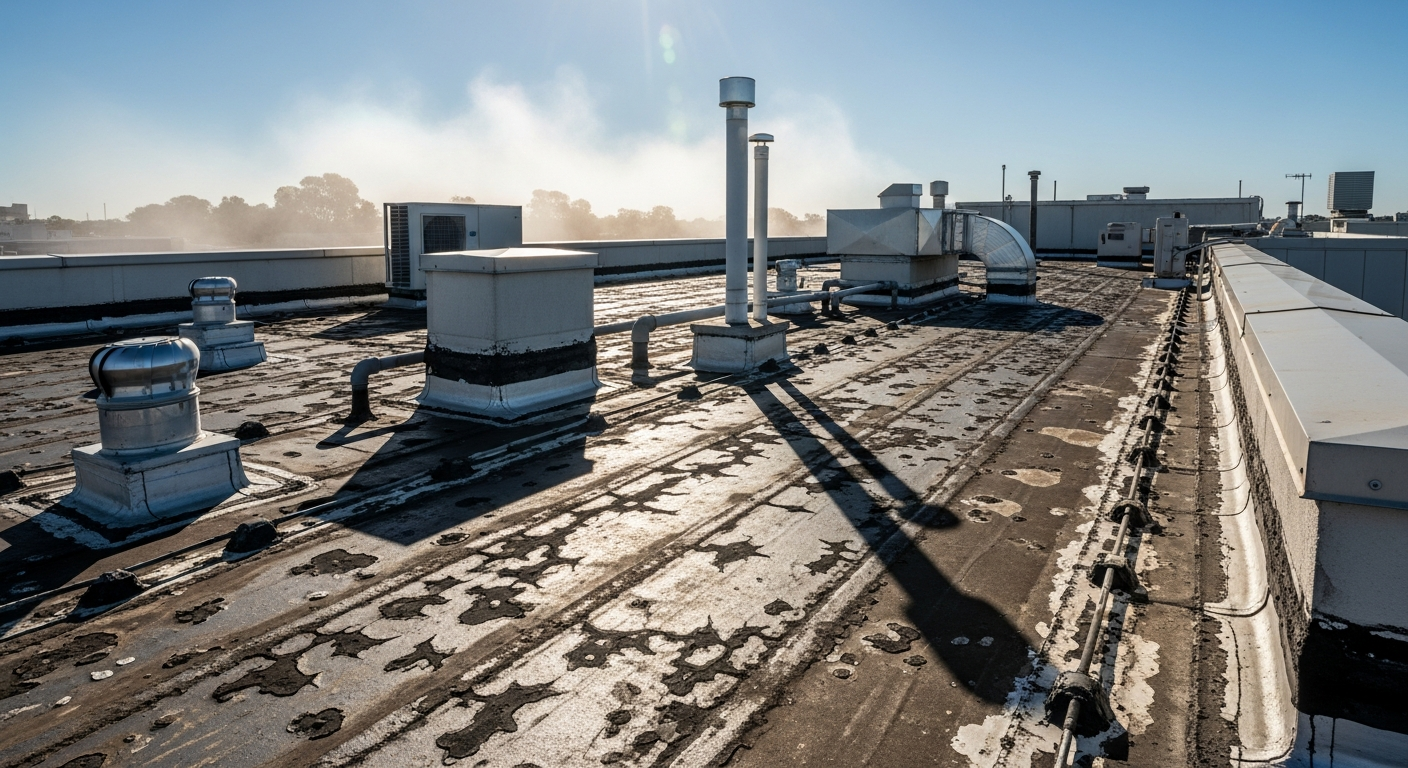
Exposed membranes (those without tile or paver protection) degrade under UV. The surface becomes brittle, cracks, and eventually loses its waterproofing capability. This is common on flat roofs, planter box areas, and some balconies.
Sealants and Gaskets
UV-exposed sealants chalking, cracking, and shrinking is one of the most common maintenance issues we encounter. Window perimeter seals, facade joint sealants, and expansion joint fillers all deteriorate under sustained UV exposure.
Painted Surfaces
UV causes paint to chalk, fade, and eventually peel. While this is cosmetic initially, exposed substrates then begin to deteriorate — timber rots, steel rusts, and render becomes permeable.
What Melbourne Property Owners Should Do
Annual Summer-End Inspection
At the end of each summer, walk your property and check:
- •All exposed sealants for cracking, chalking, or shrinkage
- •Expansion joints for sealant failure
- •Exposed membranes for cracking or blistering
- •Metal flashings for buckling or displaced fixings
- •Painted surfaces for peeling or chalking
Proactive Replacement
Don't wait for sealants and membranes to fail completely. If they're showing early signs of degradation:
- •Replace sealants before they crack through
- •Apply UV-stable top coats to exposed membranes
- •Re-coat or replace flashings before they fail
Consider Protection
Where possible, protecting membranes and surfaces from direct UV and heat extends their life dramatically:
- •Pavers or tiles over roof membranes
- •Shade structures over exposed areas
- •Reflective coatings on metal roofing
The investment in protection typically pays for itself many times over through extended membrane and material life.
Planning for Melbourne's Climate
Melbourne's climate is uniquely challenging for buildings because it combines:
- •Intense summer heat and UV
- •Cold, wet winters
- •Extreme temperature swings
- •Wind-driven rain from multiple directions
Building maintenance programs should account for all these factors. A comprehensive annual inspection — ideally in autumn, between the extremes — gives you the best chance of catching issues early and planning repairs for optimal timing.
We offer annual maintenance inspection programs for commercial and residential properties across Melbourne. One inspection per year, a clear report, prioritised recommendations, and the ability to plan and budget for maintenance rather than react to failures.
Need help with this?
If you're dealing with any of the issues discussed in this article, we can help. Get a free assessment or upload a photo for instant AI analysis.